
Article summary. Audience: Food Brands & Packaging Buyers. Topic: Custom Packaging Vs Stock Bags Food Startup. Key takeaway: The cost, brand perception, and operational tradeoffs between stock packaging with custom labels ($150-600) and fully.... Sources: ZentPak Manufacturing Data, FDA 21 CFR, ASTM Standards.
At a glance · Summarize with
You're standing at your farmers market booth. A customer picks up your granola, studies the kraft bag with your sticker label, and asks: "Is this your final packaging, or are you still working on it?" It's a fair question. Your product is great. Your label is clean. But the bag itself says nothing. You've been wondering the same thing: when do I upgrade?
I've watched this moment play out for dozens of food startups. Stock packaging with custom labels is a legitimate launch strategy —not a compromise. Custom digital printing is the upgrade that signals you're a real brand —but the costs multiply fast. The decision isn't about which is "better." It's about which is right for where you are right now.
Stock packaging with custom labels costs $150-600 for your first 500 units. Fully custom digital-printed packaging costs $1,350-3,150 for the same quantity. The $1,000-2,500 gap buys you a branded bag instead of a branded sticker —and for most brands, that investment starts paying off at 200-500 units per month.
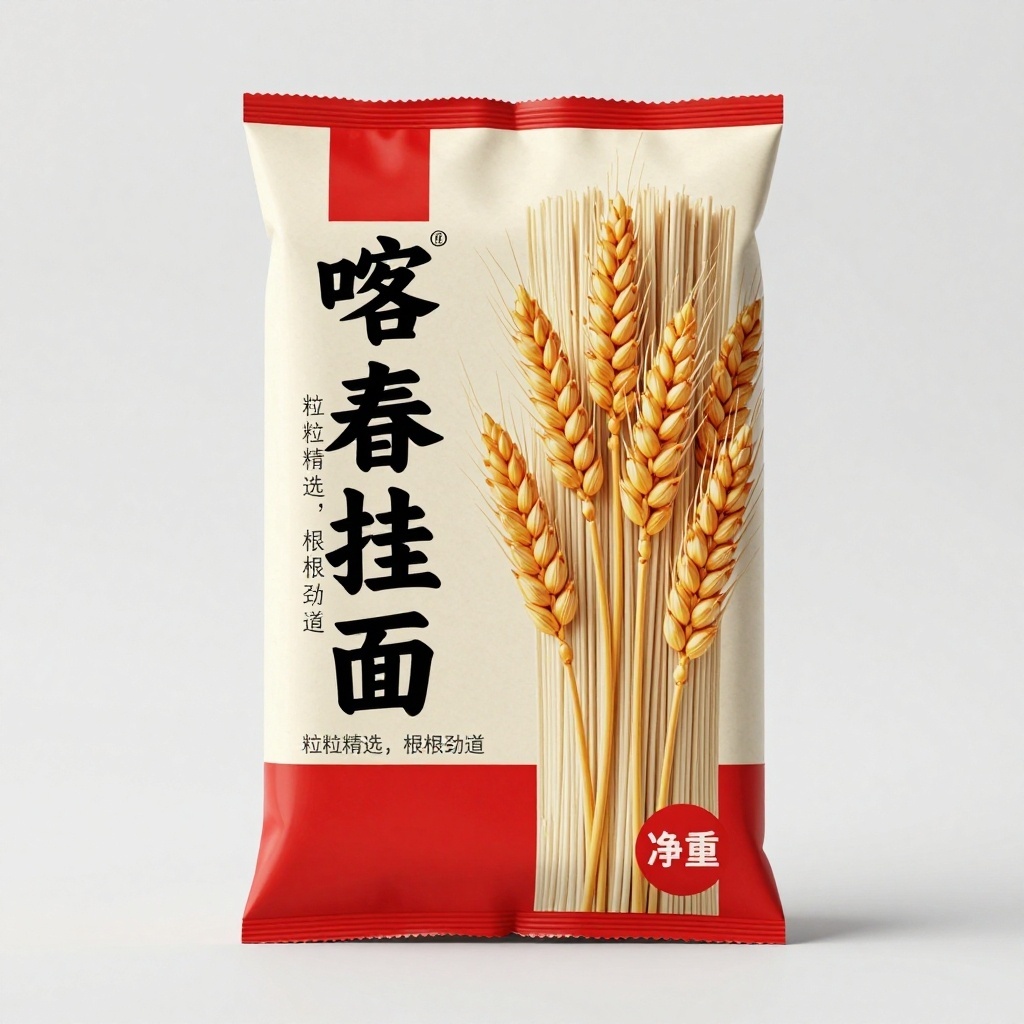
Stock Bags + Custom Labels — The $150-600 Launch Strategy
This is how most food brands start. And it works.
You buy ready-made bags from a packaging supplier —kraft, clear, white, or black stand-up pouches at $0.10-0.40 each. You design a label (Canva, Kittl, or a $50 Fiverr gig), print 500 pressure-sensitive labels at $0.15-0.40 each, and apply them by hand. Total spend: $125-400 for materials, plus about 6 hours of labeling time for 500 bags.
The math on a 500-unit run: 500 stock bags at $0.25 = $125. 500 custom labels at $0.30 = $150. One-time label design = $100. Shipping = $25. Total: $400. If your product sells for $8-12, that's $0.80 in packaging cost per unit —7-10% of retail. Acceptable.
What this gets you: a product on a shelf in under 2 weeks, for under $500, with your logo and product name clearly visible. You can change your label design next week if you want. You can test 3 flavors by printing 3 different label designs. There is zero commitment and near-zero risk.
What this doesn't get you: a fully branded package. The bag itself is generic. On a retail shelf, your sticker-on-kraft-bag sits next to competitor products with full-color custom printing from edge to edge. The visual gap is real, and it matters more in some channels than others.
This stage works best when you're testing product-market fit at farmers markets or pop-ups, selling DTC to early customers who care about your product more than your packaging, or producing under 200 units a month. At those volumes, the hand-labeling time isn't yet a significant cost, and the risk of investing in custom packaging before you've proven demand is real.
The exit signal: You're spending more than 5 hours a month labeling bags, or a buyer tells you the packaging needs work, or customers start asking versions of "is this the real packaging?" When any of those happen, it's time to run the numbers on Stage 2.
Custom Digital Printing — The $1,350-3,150 Growth Stage
This is where your brand starts looking like a brand.
Custom digital printing uses industrial presses — HP Indigo, Fujifilm —to print your full design directly onto the packaging material. No plates. No minimum order. Every square inch of the bag is yours. Your logo, your colors, your story, your back-panel copy, your nutrition facts —all printed seamlessly.
A realistic Stage 2 first order for 1,000 stand-up pouches:
| Item | Cost |
|---|---|
| Freelance bag design | $400-800 |
| Prepress file prep | $100-200 |
| 1,000 digitally printed pouches | $600-1,500 ($0.60-1.50/bag) |
| Digital proofs | $0-100 |
| Shipping | $100-200 |
| Total | $1,200-2,800 |
The per-unit cost is higher —$0.60-1.50 versus $0.25-0.40 for a stock bag. But you've eliminated the label cost, the label design cost, and the 6+ hours of hand-labeling labor. The net premium for full custom is typically $0.30-0.80 per bag. On 1,000 bags, that's $300-800 more than the stock+label approach —not the $2,000 gap the raw numbers suggest.
What changes when you go custom:
Brand perception shifts. On a retail shelf, your bag now competes visually with established brands. At a farmers market, customers pick up your product and see a cohesive, intentional brand —not a prototype. In DTC, your unboxing experience becomes shareable rather than apologetic.
Retail buyers take you seriously. I've heard this from multiple buyers: when a product shows up in a stock bag with a sticker, they assume the brand isn't ready for retail. When it shows up in custom packaging, they assume the brand has invested in itself. That assumption affects shelf placement, reorder decisions, and the buyer's willingness to take a chance on a new brand.
Multi-SKU flexibility. With digital printing, you can gang multiple designs in one print run at no extra cost. That means 3 coffee origins, 4 kombucha flavors, or 6 nut butter varieties can all be printed together. Stock+labels gives you the same flexibility but with ongoing labeling labor. Custom flexo would charge you separate plate fees for each design.
Comparison Table: Stock+Labels vs Custom Digital —8 Dimensions
| Dimension | Stock Bag + Custom Label | Custom Digital Printing |
|---|---|---|
| First-order cost (500 units) | $150-400 | $1,000-2,000 |
| First-order cost (1,000 units) | $250-600 | $1,200-2,800 |
| Per-unit cost (ongoing) | $0.30-0.60 + label labor | $0.60-1.50 (no labor) |
| MOQ | 0 (buy any quantity) | 50-500 |
| Turnaround time | 1-2 weeks (label printing) | 2-3 weeks |
| Design flexibility | Change labels any time, $0 | Change design between orders, $0 |
| Multi-SKU | Label each SKU separately | Gang designs in one print run |
| Brand perception | "Homemade / testing" | "Professional small brand" |
| Retail readiness | Low (buyers notice) | High (competitive on shelf) |
| Labeling labor | 30-60 sec per bag | 0 (printed directly) |
| Best for sales volume | 0-200 units/month | 200-3,000 units/month per SKU |
The ROI Calculator — When Custom Packaging Pays for Itself
Custom packaging doesn't need to "pay for itself" in direct sales uplift to be worth it. The ROI comes from three places, only one of which is directly measurable.
1. Retail access. The most concrete ROI: if custom packaging is the difference between getting into a store and not getting in, the packaging pays for itself in the first purchase order. A single Whole Foods region placing a $3,000 opening order covers your packaging upgrade 3 times over. This is the most common trigger for the stock-to-custom leap.
2. Labor elimination. At 200 units a month, hand-labeling takes about 3 hours. At $20/hour, that's $60/month —$720/year. At 500 units a month, it's 7.5 hours —$150/month, $1,800/year. The labeling labor alone doesn't justify custom packaging at low volumes. But it's real money that narrows the gap.
3. Perceived value. Harder to measure but equally real: customers will pay more for a product in beautiful packaging. The granola in a kraft bag with a sticker feels like a $7 product. The same granola in a custom matte-finish pouch with a window feels like a $10 product. If you can capture even $0.50 of that perceived value in pricing, the packaging premium is covered.
Here's the calculus for a brand selling 500 units a month:
- Stock+labels: 500 units × $0.50/bag = $250/month packaging + $75/month labeling labor = $325/month, $3,900/year
- Custom digital: 500 units × $0.90/bag = $450/month, $5,400/year. Zero labeling labor.
- Annual premium for custom: $1,500.
If going custom helps you land one new retail account worth $2,000 in wholesale revenue, or lets you raise your retail price by $0.50/unit ($3,000/year at 500 units/month), the investment pays for itself in under 12 months.
The threshold: I tell founders to upgrade when they hit 200-300 units a month consistently, or when a retail buyer shows interest, whichever comes first. Below that, stock+labels is the financially rational choice. Above it, the brand perception and operational benefits of custom packaging start outpacing the premium.
The Hybrid Approach — Start Stock, Graduate to Custom
You don't have to upgrade everything at once. The smartest brands I work with run a mixed strategy.
Core products —your bestseller, the SKU that does 60%+ of your volume —gets custom packaging first. New products and seasonal items stay on stock+labels until they prove themselves. The nut butter brand with a flagship almond butter at 400 units/month and a new cashew butter at 50 units/month should custom-print the almond pouches and keep the cashew on labels. When the cashew butter proves its demand, it graduates.
This approach limits your upfront investment to the SKUs that are already earning, and prevents the painful scenario of $2,000 in custom packaging for a product you discontinue 4 months later.
The key enabler: digital printing. Because there are zero plate fees, you can graduate one SKU at a time. With traditional flexo, you'd need to commit to all SKUs simultaneously to amortize the setup costs. Digital lets you move at the pace of your actual demand, not a supplier's minimum.
5 Signs You're Ready to Upgrade From Stock to Custom
I've watched this transition enough times to know the signals. If two or more of these are true, it's time.
1. A retail buyer asked about your packaging. This is the most common trigger. When a buyer says "we love the product, but the packaging needs work," they're not being picky —they're telling you what their customers expect. Heed the signal.
2. Labeling is eating your weekends. If you dread order fulfillment because of the 3-hour labeling session, you're past the point where stock+labels makes sense. Your time is better spent on sales, product development, or anything other than applying stickers.
3. Customers ask "is this your real packaging?" This question seems innocent. It's not. What the customer is really asking: "Are you a real brand or a hobby project?" When this question becomes recurring, your packaging is holding back your brand perception.
4. Your product is in a competitive category. If you're the only craft hot sauce at the farmers market, stock+labels is fine. If there are three other hot sauce brands on the same shelf —and two of them have gorgeous custom packaging —you're losing sales to inferior products with better wrapping.
5. You have 6 months of consistent sales data. The biggest risk of custom packaging is ordering 1,000 bags for a product that doesn't sell. If you have 6+ months of stable demand, that risk drops dramatically. You can order with confidence.
FAQ: Common Questions About Stock vs Custom Packaging
Q: Can I start with stock bags and switch to custom later?
Yes, and that's exactly what I recommend. Stock for testing and launching. Custom for scaling. The transition is seamless —same bag dimensions, same supplier relationships, just a different printing method on the next order.
Q: Will custom packaging actually increase my sales?
In DTC, the impact is modest but real —better unboxing, higher perceived value, slightly higher conversion. In retail, the impact can be decisive —your product competes visually with established brands. A buyer who sees a stock bag with a sticker will often assume you're not ready for their shelf.
Q: What's the absolute minimum I can spend on custom packaging?
About $1,300 total —$500 for a freelance design and $800 for the minimum digital print run (500 pouches at $1.20-1.60 each, depending on supplier). Below that, you're better off investing in premium labels and better stock bags until your volume justifies custom.
Q: Should I design the packaging myself or hire someone?
If your budget is under $400, DIY with Canva or Kittl using print-specific templates. If your budget is $400-800, hire a packaging-specific freelancer on Fiverr or Upwork —look for someone who mentions "print-ready" and "dielines" in their portfolio. If your budget is $1,000+, work with a designer who specializes in food packaging. The extra cost buys you someone who knows bleed, CMYK, and FDA labeling requirements —things that cost you reprints if they're wrong.
Case Study: Nora's Nut Butter
The Challenge: Nora launched her almond and cashew butters at a local farmers market with stock jars and custom label stickers. Total packaging cost: $180 for her first 200 units. It worked. She built a following. After 8 months, she was selling 400 jars a month —200 at the market, 200 through her website. A regional natural foods buyer tried her almond butter and asked for a meeting.
The Stock Problem: The buyer loved the product. But the stock jar with a sticker, in his words, "looks like a prototype." He wanted to see "retail-ready packaging" before placing an opening order. Nora had 3 weeks to figure it out.
The Custom Solution: She worked with a freelance designer on Fiverr ($400) to create a full-wrap label design. A digital label printer produced 2,000 labels —1,500 almond, 500 cashew —for $1,200 ($0.60/label). The same stock jars, but now with edge-to-edge custom labels instead of stickers. Total investment: $1,600.
The Results: The buyer placed a $2,400 opening order for 6 stores. The custom labels cost $1,600 but unlocked $2,400 in immediate wholesale revenue —and an ongoing retail relationship. Nora's website conversion rate improved modestly (she attributes about half of the 5% lift to the new packaging). She's now at 800 jars a month, and the custom labels cost $0.45 each on reorders. The stock-to-custom leap paid for itself in the first purchase order.
Conclusion
Stock packaging with labels is a smart launch strategy, not a failure of ambition. Custom digital printing is the logical upgrade, not a vanity expense. The right time to switch is when your volume, your sales channels, and your customer expectations all point in the same direction —usually around 200-300 units a month, or when a retail buyer enters the picture. Start with your bestseller, keep new SKUs on stock, and let demand drive the decision.
Next step: Calculate your monthly labeling time in hours. If it's over 5 hours, request a digital printing quote for your best-selling SKU only. Compare the annual premium against one new retail account worth $2,000+. That's your answer.
Related Resources
- ZentPak manufacturing capabilities
- request free packaging samples
- flexible packaging low MOQ
- order custom packaging from 100 units
Next Step
Get Your Free Quote in 24 Hours — include pouch size, material, quantity, and target launch date.
Get Your Free Sample Kit — test seal strength, print color, and shelf-life fit before you scale.
Frequently Asked Questions About Custom Packaging Vs Stock Bags Food Startup
Expert Consultation
Not Sure Which Packaging Is Right?
Our packaging engineers review your product specs and recommend the optimal material, size, and barrier combination. Free 20-minute consultation.

